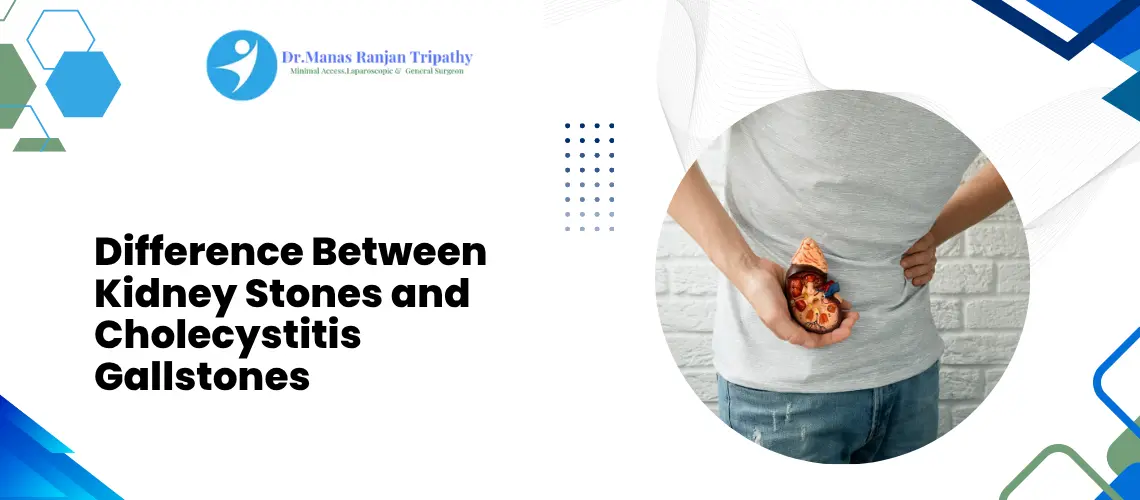
Pain in the abdomen or side of the body can be alarming, and many people often confuse kidney stones with gallstones (cholecystitis) because both conditions can cause severe pain and discomfort. However, these are two completely different medical conditions that affect different organs and require different treatment approaches.
Many patients ask:
“Is my pain due to kidney stones or gallstones?”
“How can I tell the difference between the two?”
Dr. Manas Ranjan Tripathy – Proctologist in HSR Layout, explains the key differences between kidney stones and cholecystitis caused by gallstones, helping patients understand when to seek medical attention.
Understanding Kidney Stones
Kidney stones are hard mineral deposits that form inside the kidneys. These stones can vary in size and may travel through the urinary tract, causing significant pain.
Common Causes of Kidney Stones
- Dehydration
- High salt intake
- Family history
- Certain metabolic disorders
- Recurrent urinary infections
Symptoms of Kidney Stones
- Severe pain in the side or lower back
- Pain radiating toward the groin
- Burning sensation while urinating
- Blood in urine
- Frequent urge to urinate
- Nausea and vomiting
The pain often comes in waves and can be extremely intense.
Understanding Cholecystitis and Gallstones
Gallstones are hardened deposits that form inside the gallbladder. When a gallstone blocks the gallbladder outlet, it can cause inflammation known as cholecystitis.
Common Causes of Gallstones
- Obesity
- High-fat diet
- Rapid weight loss
- Diabetes
- Family history
- Hormonal changes
Symptoms of Gallstones and Cholecystitis
- Pain in the upper right abdomen
- Pain after eating fatty meals
- Pain that may spread to the back or right shoulder
- Fever and chills
- Nausea and vomiting
- Indigestion and bloating
Unlike kidney stone pain, gallstone pain is usually concentrated in the upper abdomen.
Doctor Explains
In this video, Dr. Manas Ranjan Tripathy explains:
- Differences between kidney stones and gallstones
- Common symptoms of each condition
- Warning signs that require medical attention
- Available treatment options
Treatment Options
Kidney Stones
Treatment may include:
- Increased fluid intake
- Medications
- Lithotripsy
- Endoscopic stone removal
Gallstones and Cholecystitis
Treatment often includes:
- Dietary modifications
- Medications
- Laparoscopic gallbladder removal surgery (Cholecystectomy)
Laparoscopic surgery is considered the gold standard for symptomatic gallstones because it offers:
✔ Smaller incisions
✔ Less pain
✔ Faster recovery
✔ Shorter hospital stay
✔ Early return to normal activities
FAQs
1. Are kidney stones and gallstones the same?
No. Kidney stones form in the kidneys, while gallstones form in the gallbladder.
2. How can I tell if I have gallstones?
Pain in the upper right abdomen, especially after fatty meals, may indicate gallstones.
3. Can gallstones disappear on their own?
Most gallstones do not disappear and may require treatment if symptoms develop.
4. Do kidney stones always need surgery?
No. Small stones may pass naturally, while larger stones may require intervention.
5. Is laparoscopic gallbladder surgery safe?
Yes. It is a commonly performed and safe minimally invasive procedure.
6. When should I see a doctor?
Seek medical attention if you experience severe abdominal pain, fever, vomiting, or urinary symptoms.
Clinic Address
SARJAPUR ROAD
Manipal Hospital, Survey no 45/2, Ward 150, Sarjapur – Marathahalli Rd, Opposite Iblur, Ambalipura, Bellandur, Bengaluru, Karnataka 560102
📞 +91 8150000200
HSR LAYOUT
#54, 1st Floor, Above SBI Bank, Behind BDA Complex, 12th Main Rd, HSR Layout, Bengaluru, Karnataka 560102
📞 +91 8150000200
Final Takeaway
✔ Kidney stones and gallstones are different conditions affecting different organs
✔ The location and nature of pain often help distinguish them
✔ Early diagnosis can prevent complications and improve outcomes
✔ Laparoscopic surgery offers an effective treatment option for symptomatic gallstones
✔ Timely consultation is important for accurate diagnosis and treatment
For expert evaluation and advanced minimally invasive surgical care, consult Dr. Manas Ranjan Tripathy in HSR Layout, Bangalore.